August 2025, Darwin, Australia
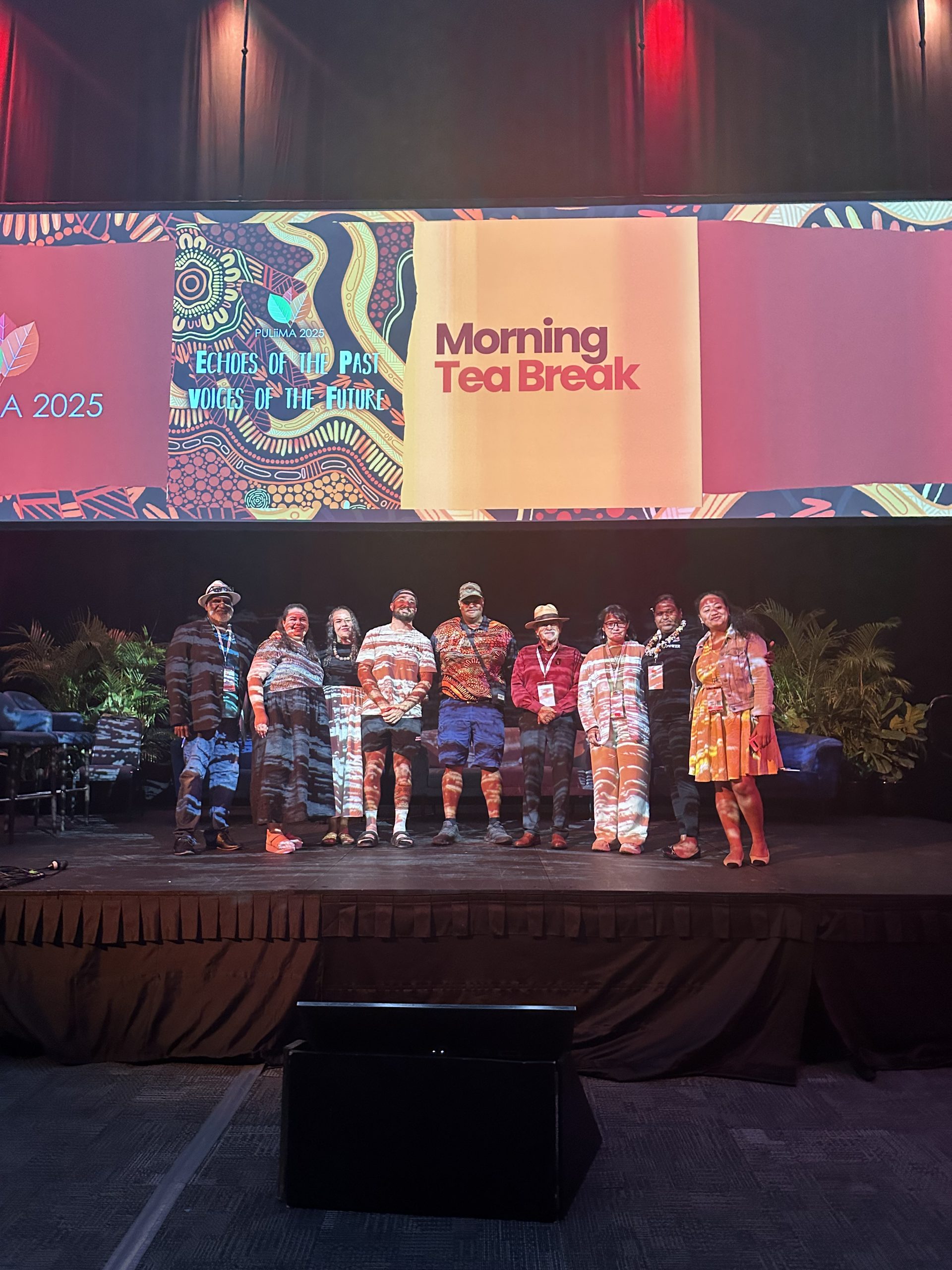
The Office of the Indigenous Languages Commissioner (the Office) participated in the PULiiMA conference on Indigenous languages and technology, described as the largest conference on Indigenous languages in the Global South. The gathering takes place every two years, bringing together language advocates from across Australia and around the world to exchange knowledge, share best practices, and strengthen global networks to advance language revitalization efforts.
The conference was opened by the Larrakia people, the traditional custodians of the land, with an “acknowledgment of the land.” The Commission was invited to participate in their cultural protocols as part of a saltwater ceremony led by Larrakia elders and knowledge keepers. It was a significant moment that set the tone for the days ahead by honoring the land, the sea, and the ancestors.
The Commission had the honor of contributing to and participating in several sessions and meetings during the visit. It met with representatives from the Miromaa Aboriginal Language Technology Centre, which uses digital tools to support community language projects in Australia and abroad. It also gave a presentation at a session that brought together several major Indigenous “language hubs” and organizations working hard to implement the “Closing the Gap” framework. The framework brings together governments and Indigenous organizations to set measurable goals. The Torres Strait Islander Languages Policy Partnership was launched in 2022 and was accompanied by a federal investment of $20.8 million to support nationwide implementation. Target 16 of the “Closing the Gap” framework is to achieve sustained growth in the strength of their languages by 2031.
The Commission met with representatives of the Aboriginal Languages Trust, established under New South Wales’ Aboriginal Languages Act (2017), which plays an important role in supporting regional language hubs. This was an opportunity to work together, share knowledge, and learn about the Trust’s structure and operations with the goal of supporting communities.
Commissioner Ignace delivered the opening address, “Out from the Shadows and Into the Light: The Role of the Office of the Commissioner of Indigenous Languages” (from the shadows to the light: the Role of the Office of the Commissioner of Indigenous Languages), in which he spoke about the long journey that began with the Working Group on Indigenous Languages and Cultures and continued through the passage of the Indigenous Languages Act and the creation of the Commission. He shared the key initiatives and priorities since the Commission’s inception. He then addressed a message to the next generation of language warriors, stating that language revitalization will be measured by the number of children who grow up speaking their language fluently. He emphasized the urgency of having access to support measures, resources, and environments where their languages are normalized at home, in their communities, at school, and in the media.
Following the keynote address, the commissioner participated in a panel discussion titled “From Sacred Land to Cyberspace: Living in a Changing World,” where he spoke about the inseparable link between language, the land, and the knowledge that stems from them.
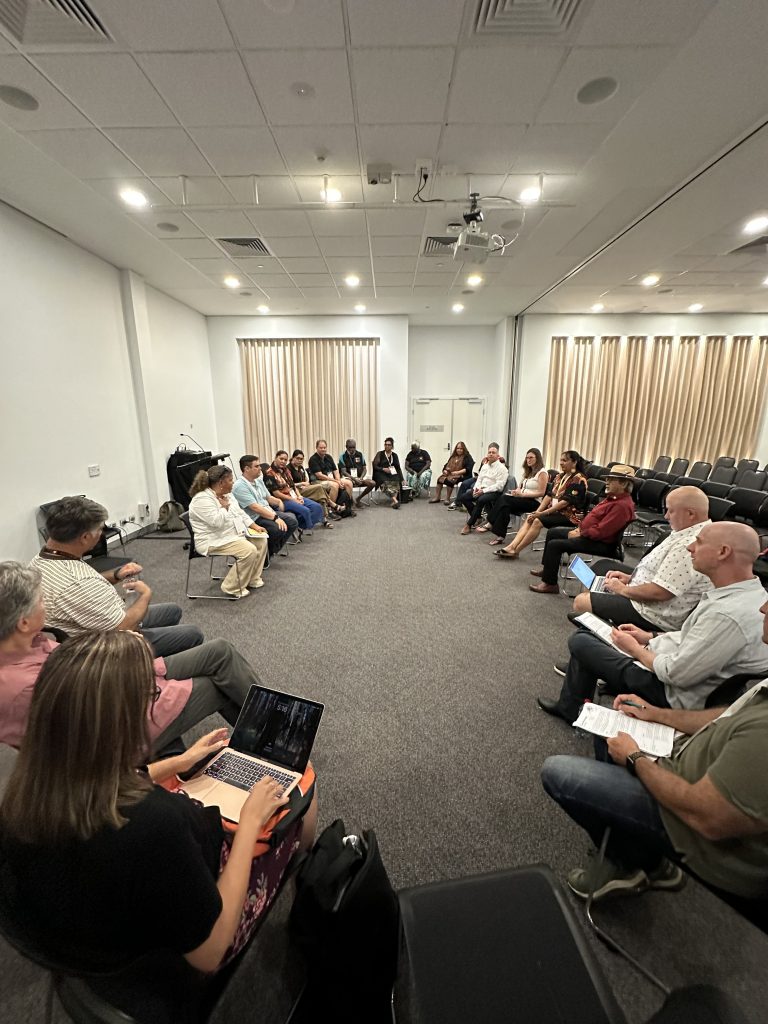
During the event, Commission representatives participated in a Canada-Australia side event, where they engaged in a dialogue on current issues, promising practices, and key takeaways. The Commission discussed the organization of its first global summit, ONDES 2025, and highlighted the benefits of fostering enthusiasm for Indigenous languages, particularly by focusing on young people.
PULiiMA was a celebration of languages, technology, and art as expressions of living knowledge. The evening gala, where participants were invited to share songs in their own languages, was a highlight of the event. PULiiMA demonstrated that, despite geographical differences, Indigenous peoples around the world share many of the same aspirations for their languages: to hear children speaking them, to see them flourish in homes and communities, and to ensure they remain vibrant for future generations. The strengthened relationships, exchanged knowledge, and shared ideas throughout the gathering reaffirmed the importance of international collaboration in advancing the revitalization of Indigenous languages. The Commission left inspired by the innovation, leadership, and dedication of Indigenous language champions from around the world, and looks forward to nurturing these connections to create a future where Indigenous languages are thriving, visible, and celebrated.